

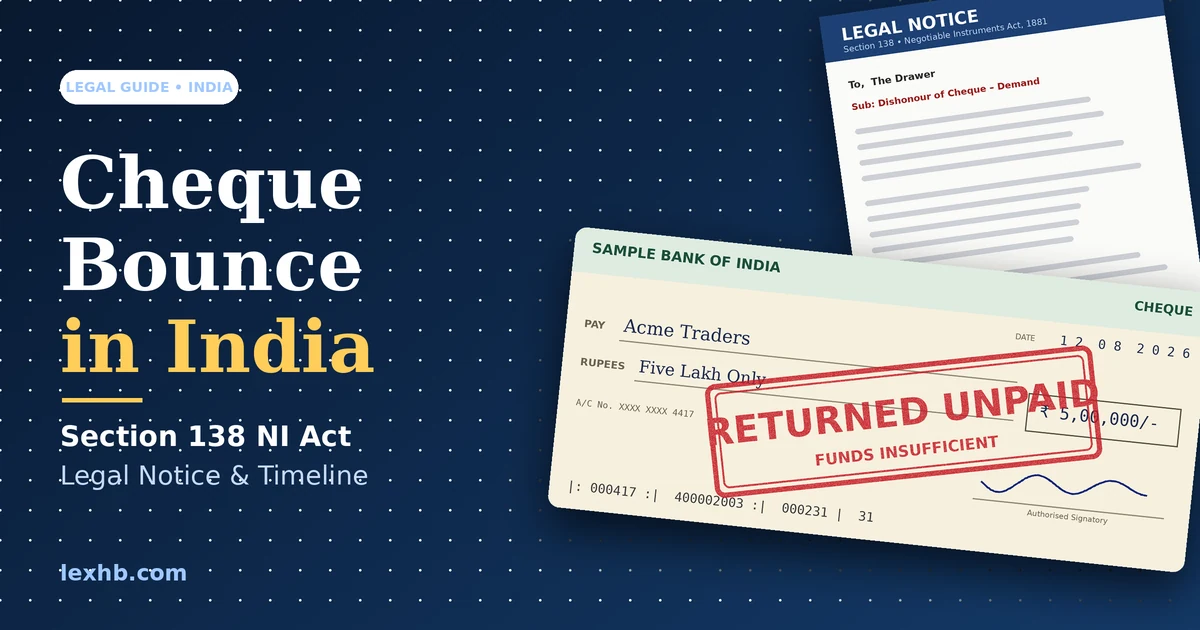
It is a very common issue with cheque bounces in India. When you deposit a cheque to get the cash in return and the money you are owed and it seems very frustrating when, after a day or two, the bank sends it back unpaid. A cheque bounce case in India is governed by the strict deadlines and authorities under Section 138 of the NIA—Negotiable Instruments Act, 1881.
In this article, you will come to know about what counts as a cheque bounce and understand the exact timeline you should follow. What should be done at the moment of cheque bounce situation? What to do whether you are the person holding the cheque of the person who has issued it? Let’s understand how we can tackle this situation and resolve this issue without following cases for years in court.
What Is a Cheque Bounce Under Section 138?
A cheque bounce is also known as check dishonor, which happens when a bank refuses to pay a cheque payment or returns it to the person who has submitted it. In every case, it is not an offence, but we can understand the laws and come to know the legal formalities for the cases that cause some kind of dispute in cheque bounce cases.
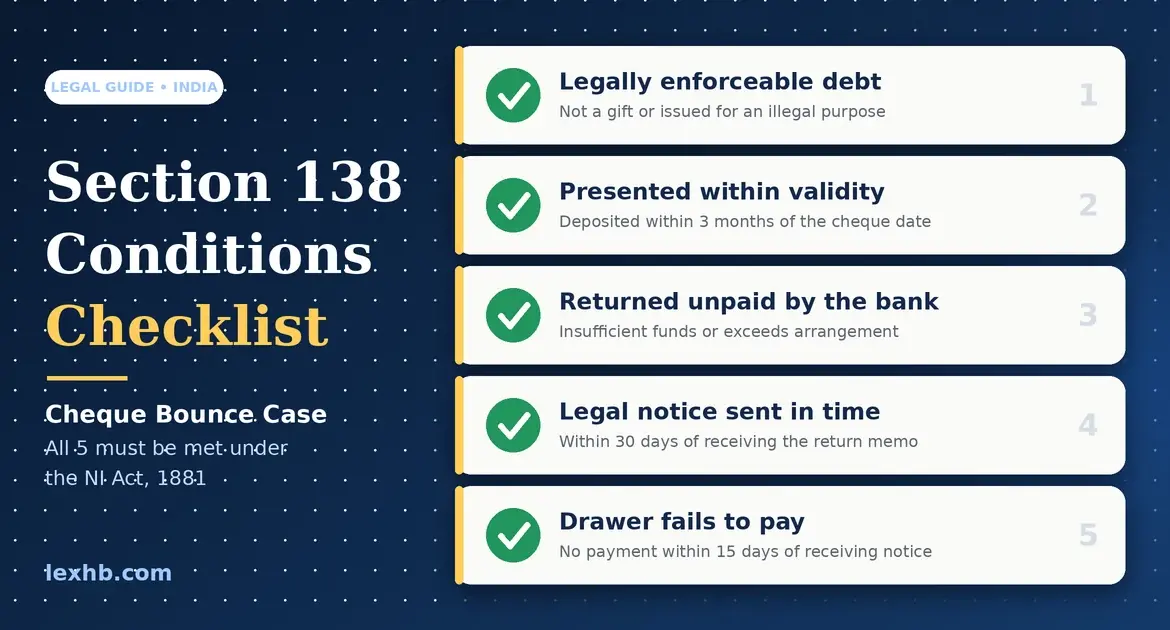
The Section 138 is a law that is governed by the central government of India for cheque bounce disputes that applies when all of these conditions are met:
- A cheque was given as a gift or for an illegal purpose that does not qualify.
- The Cheque was issued to repay a legally enforceable debt or liability.
- The Cheque was submitted to the bank within its validity period, like three months in normal cases from the date on the cheque.
- The bank refused to pay and returned it unpaid because of insufficient funds. Sometimes, it exceeds the arrangement with the bank.
- The payee sent a written demand notice within the allotted duration, and the drawer still did not pay.
In case there is any technical reason such as a signature mismatch or a wrong date mentioned, the legal position can differ, in that case, the authorities will check the facts before deciding any course of legal action.
Common Reasons Why Cheque Bounce
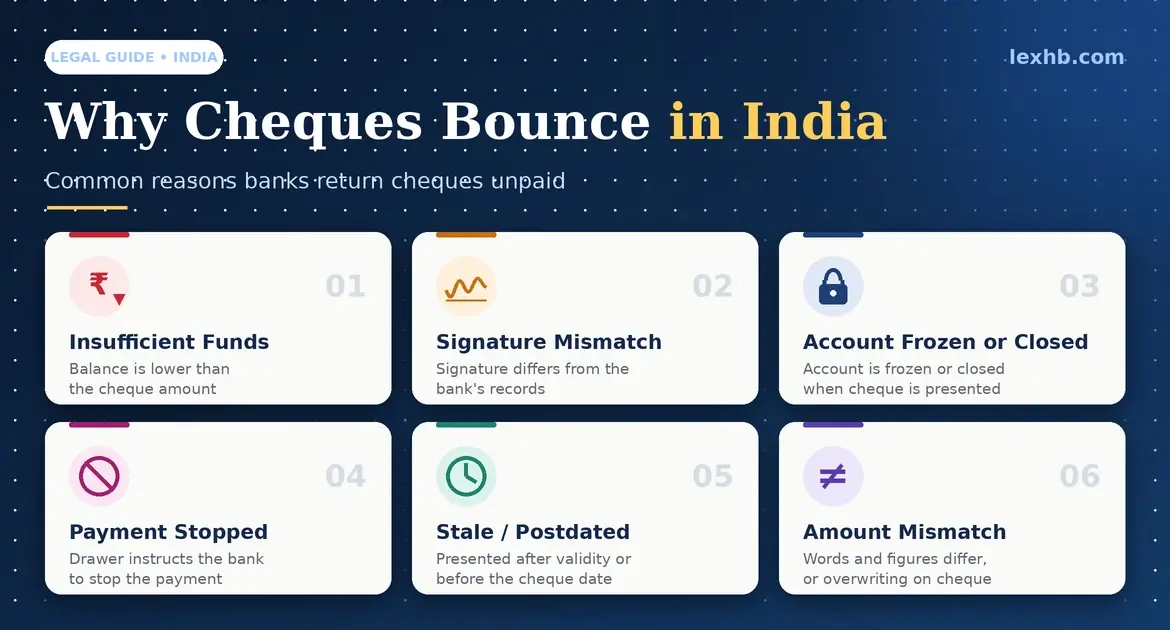
There are many reasons why banks return the cheques back. Everyone should save this return memo you receive, as it will state the exact reason behind the cheque bounce condition. These reasons may include:
- Insufficient funds in the account
- Signatures differ from the bank’s records
- Account frozen or closed
- Payment stopped by the drawer
- The cheque is postdated or stale and presented early
- Mismatch or overwriting between the amount in words and figures
The “payment stopped by drawer” and “account closed” also fall under the scope of Section 138 in most of the cases. Sometimes the reason looks unusual, but it is wise not to assume a case is weak.
Step-by-Step Process of The Section 138 Timeline
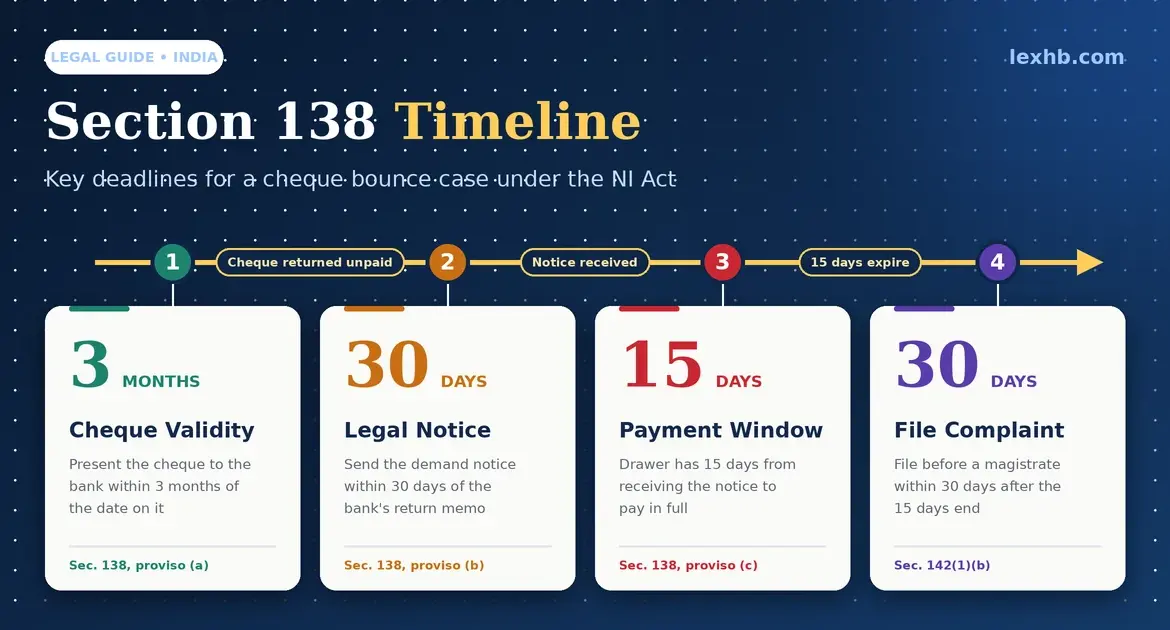
Here, most of the people get the things incorrectly. The legal authorities and the law provide a short and fixed sequence of steps to follow while filing a complaint under Section 138.
For any solid and good reason, the court can accept some short delays in filing the complaints, but generally we should file the complaint as early as we can.
For Cheque Holders:
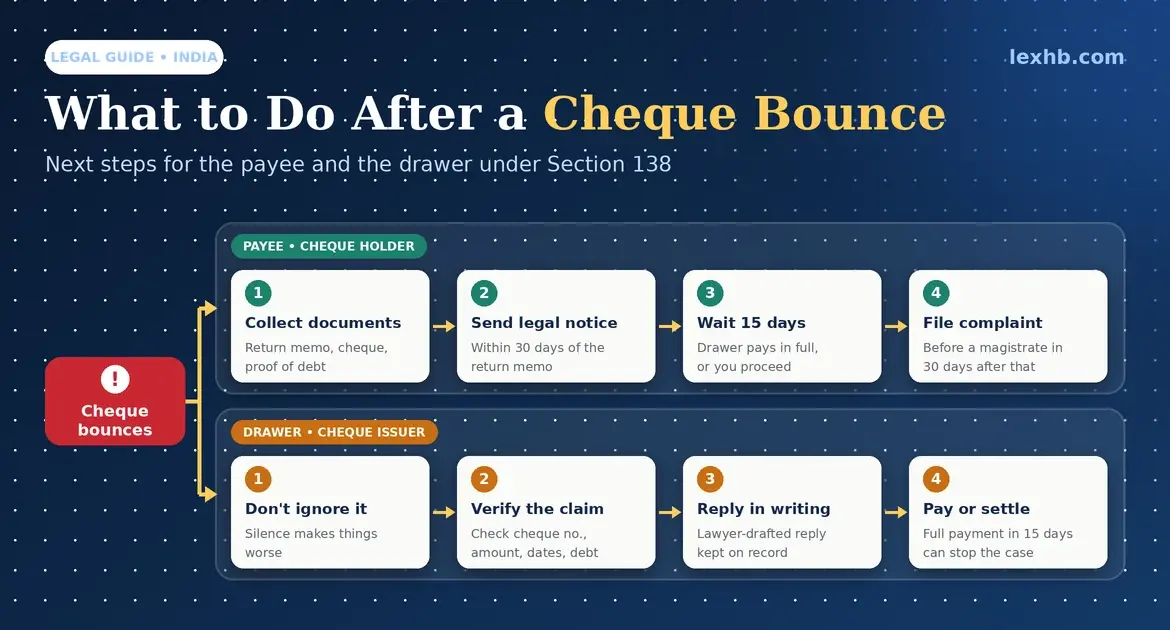
Here are a few helpful instructions to follow for cheque holders:
- Collect all your useful documents: Keep the original cheque safe, the bank’s return memo, your deposit slip, and any proof of the underlying debt, such as an invoice, loan record, agreement, or messages witnessing your payment terms.
- Send a legal notice: In the cheque bounce cases, a legal notice should be sent to acknowledge the payee about the bounce situation It should include, the cheque number, date, amount, the bank name, the date of dishonor, and the reason by which it is rejected to process. Also, it should clearly clarify the demand payment within the duration of 15 days. Send this notice by registered post or by speed post, and it can also be sent by email as well so that you can have proof of delivery. Any notice that can be delayed will weaken your case, so it is a good step to send a lawyer draft.
- Wait for 15 Days: If the drawer pays off the full amount, the matter ends here. If they offer a part payment, think carefully before accepting the amount, because it will affect your complaint.
- File the Complaint on time: The Complaint is filed before a magistrate. In most cheque deposited through an account, the court has jurisdiction that is generally the one where the payee’s bank branch is associated, but it should be finally confirmed from the lawyer’s end.
For Receivers Cheque Bounce Notice
If you have received a cheque bounce notice, let’s understand what to do in this case. Getting a legal notice is stressful, but it is not the same as being convicted. There is a time duration of 15 days that matters a lot. Here are a few steps that must be taken while we receive any notice regarding cheque bounce.
Do not ignore it: Ignorance and silence make things worse.
Check the details: Verify all the details mentioned in the notice about the cheque number, amount, and dates, and check whether the dates mentioned are correct or incorrect. Whether the notice was sent within the allowed 30 days of time mentioned or not.
Verify the Claim: Check and decide whether the debt is genuine or not. In some cases, the cheque, sometimes given for security purposes, was misused, or the debt was already paid. In this case, you may have a defense, but you should respond to that notice with a written reply.
Paying or Settling: Consider the full cheque amount within the 15 days of receiving the notice; it can stop the further processing of the Section 138 case in the court.
Written Reply : A short written reply drafted by a lawyer is far better than any verbal or phone communication. It will be a written proof anywhere.
Avoid any verbal communication, replying emotionally, or admitting things were not necessary and that cannot be proved later on. So keep the response calm and on the records.
Penalties and Remedies
If the drawer has the mistake under Section 138, it will cost imprisonment of up to two years, a fine of up to twice the cheque amount, or both. In practice, the court often focuses on getting the payee their money back.
Some more points to focus on while penalties and remedies:
Interim Compensation: Under Section 143A, the court can ask the drawer to pay the interim compensation of up to 20% of the cheque amount while the case is still going on.
Appeal Deposit: In case the convicted drawer appeals, according to Section 148, it allows the appellate court to require a deposit of at least 20% of the fine or compensation awarded.
Settlement is allowed: In most of the cases, cheque bounce offenses can be compounded; that means the parties can settle the matter even after the case has begun, usually with the court’s permission.
There are provisions available for all drawers and payees that can be amended and interpreted by courts over the years, so there is a need for verifying the current law scenarios before going forward.
Does a Cheque Bounce Case Get Settled Without a Long Trial?
Yes, and most of the cases get settled down. Cheque bounce cases are fully urged in the courts, and a typical trial can take years. So there are better ways to settle down with any mediation, negotiation, and structured dispute resolution methods. The third-party dispute resolution methods have become very popular these days that is best choice for both sides in such cases.
For the payee, it means getting paid sooner without waiting for any final verdict. For the drawer, it can mean avoiding any criminal record and the stress of repeated hearings in the court. In the structured third-party online dispute resolution process, legal professionals review all the facts and figures and help both sides to reach a realistic payment plan that often works better than fighting for a long time.
At LexHB, we have a professional team of lawyers that brings 15 years of specialization and experience and has handled over 1,000 cases.You can get more information about our approach on our Cheque Bounce Dispute Resolution page and have our success stories about recovering dues for many organizations with our Debt Resolution Services.
If the drawer has the mistake under Section 138, it will cost imprisonment of up to two years, a fine of up to twice the cheque amount, or both. In practice, the court often focuses on getting the payee their money back.
Some more points to focus on while penalties and remedies:
Interim Compensation: Under Section 143A, the court can ask the drawer to pay the interim compensation of up to 20% of the cheque amount while the case is still going on.
Appeal Deposit: In case the convicted drawer appeals, according to Section 148, it allows the appellate court to require a deposit of at least 20% of the fine or compensation awarded.
Settlement is allowed: In most of the cases, cheque bounce offenses can be compounded; that means the parties can settle the matter even after the case has begun, usually with the court’s permission.
There are provisions available for all drawers and payees that can be amended and interpreted by courts over the years, so there is a need for verifying the current law scenarios before going forward.
Frequently Asked Questions
Are check bounces considered a criminal offense in India?
Yes, under Section 138 of the NIA—Negotiable Instruments Act, it is considered a dishonored check that comes under the legal conditions, which is a criminal offense. But it is generally treated as a compoundable one that can be settled.
In how many days or time period should one send a legal notice after the cheque bounces?
You should send the demand notice within 1 month after receiving the bank’s information that the cheque was retuned upaid.
What should be done if the drawer pays after sending the notice?
If the drawer pays the full amount within 15 days of receiving the notice, there will be no complaint filed under Section 138.
Can we file a case if the signature mismatch and the cheque was returned?
There are several facts behind this. In this case, the court will analyze the exact reason for returning. So it is suggested to contact and follow a lawyer before making any decision to file a complaint.
Is there any chance to settle the case related to cheque bounce out of court?
Yes definitely, you can settle it down at any stage. The parties can compound the offense at any stage of the case. Most such cases end up in a negotiation settlement outside the court itself.
Are you facing any cheque bounce issues?
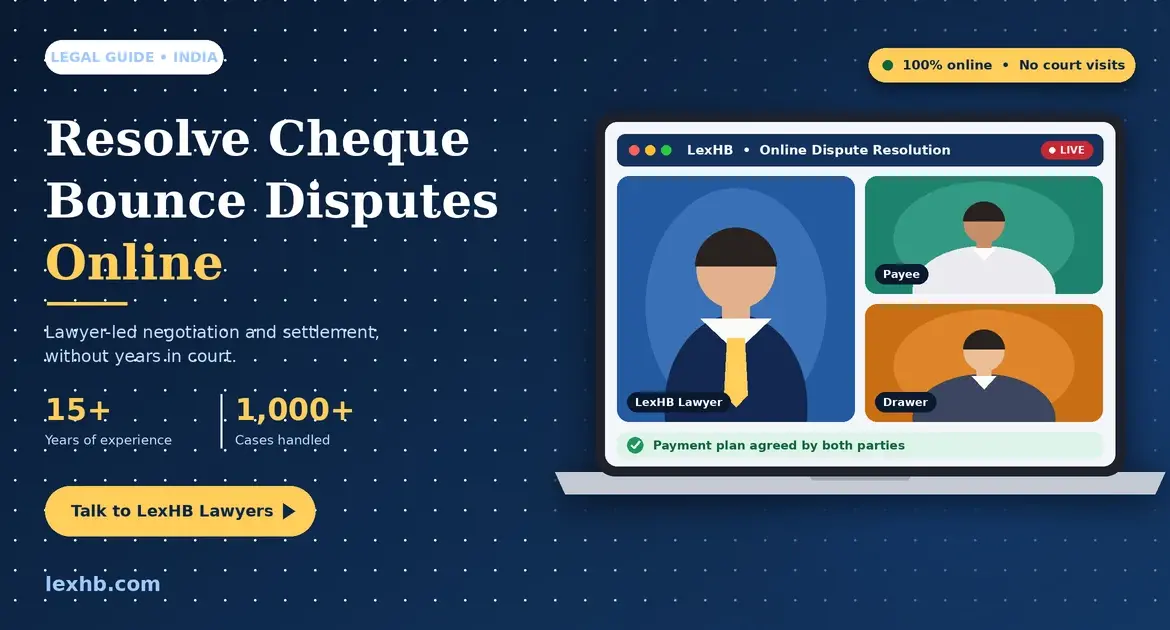
If you are chasing your payment or have received any notice, the first few days matter a lot. We recommend getting in touch with our team and getting legal professional help who will review your situation and contact you directly. Our team will hold up all the processes and guide you in an appropriate process follow-up.
Disclaimer: The above article is written for general information and is never legal advice for anyone in any condition. The laws, limits, and court procedures can change periodically, so speak to a qualified lawyer about your specific case.